“Nobody knows exactly what they've got on this island, but they've had forty years to put it there.”
Quote from Sands of Iwo Jima (Universal Studios, 1949)
Think of an island in the middle of the Pacific Ocean and you probably picture a tropical paradise with crystal-clear water, white sands and palm trees gently swaying in the warm breeze. It would be perfect, idyllic, but definitely not a description of Iwo Jima.
Just 750 miles south of Tokyo, Iwo Jima is little more than a speck in the vast Pacific Ocean, and about as inhospitable as could be imagined. A little under five miles long with Mount Suribachi at the southeastern tip, the sulphur-reeking chunk of rock is scattered with steep and broken gullies that cut across the surface and are covered by scraggy vegetation and a fine layer of black volcanic ash.

Surprisingly, Iwo Jima had a civilian population of around 1,000 before they were forcibly evacuated during the Japanese military build-up in 1944. The Japanese had no doubt about the importance of the island. It was one of the last outer defences shielding the home islands, and they were determined to keep control whatever the cost.
With a garrison of around 20,000 troops under the command of Lieutenant General Tadamichi Kuribayashi, the Japanese took full advantage of the island’s natural features and turned it into a fortress of underground tunnels and defensive bunkers, riddled with concrete pillboxes, artillery positions, machine-gun pits, trenches and mortar sites.
Three divisions of the United States Marine Corps (over 70,000 men) would be involved in the amphibious landings at the beaches on the southeast coast of Iwo Jima, in sight of Mount Suribachi, with a goal to capture the entire island - including its three airfields - to provide a staging area for attacks against the Japanese mainland.
February 19, 1945, was D-Day at Iwo Jima. The Third Marine Division (initially held in reserve) had sailed from Guam, which it had captured from the Japanese in August 1944, while the Fourth and Fifth Divisions were coming from Hawaii. With the Third Division were a number of marines who, before the war, had earned their living playing professional baseball. Bob Addis was an outfielder in the Yankees organization, James Stewart was a pitcher with the Atlanta Crackers, Jim Hedgecock was a left-handed hurler in the Browns organization, Stan Bazan was a catcher who was also in the Browns system, Bob Schang (son of former major league catcher, Wally Schang) was a catcher in the Cotton States League and Ed Beaumier was a pitcher in the Canadian-American League. Two youngsters, Jimmy Trimble and Frank Ciaffone, had been signed by big league clubs (the Senators and Dodgers respectively), while Ray Champagne and Billy Parish were top-level semi-pro players; Champagne from Rhode Island and Parish from Texas. There was also Jimmy Scondras, who had been a baseball star at Holy Cross, and Jim Morris and Pee Wee Day, both high school players.
 |
| Jimmy Trimble |
 |
| Ray Champagne |
The Fourth Marine Division had a bona fide major leaguer in Harry O’Neill, who had appeared in one game behind the plate for the Philadelphia Athletics in 1939. They also had Jack Griffin, a ballplayer from the University of Kansas, and Owen Nilsen, a catcher in New York’s highly competitive Queens Alliance League.
 |
| Harry O'Neill |
Meanwhile, within the ranks of the Fifth Marine Division were first baseman Jack Nealy of the Birmingham Barons, Bob Holmes, a pitcher in the Yankees organization; outfielder Jack Lummus, a football and baseball star at Baylor who played minor league ball in the West Texas-New Mexico League; John Beck a pitcher at San Diego State; Wayne Terwilliger, a high school shortstop who was at Western Michigan College before enlisting, and Mike Furdyna, a high school standout from Troy, New York, who was being closely observed by the Brooklyn Dodgers.
 |
| Jack Lummus |
Included in the air support during the invasion of Iwo Jima were Chicago White Sox first baseman Jake Jones, now a fighter pilot aboard the carrier USS Yorktown, and Texas League outfielder Arnold Traxler, who flew torpedo bombing missions from the carrier USS Hornet. During support of ground forces on Iwo Jima, Lieutenant Traxler was shot down by Japanese anti-aircraft fire and had to be rescued from the sea by a destroyer. There was also Dodgers farmhand Walt Schmisseur, now a fighter pilot aboard the carrier USS Lexington. Navy personnel on the carriers included Yankees first baseman Buddy Hassett (USS Bennington), Indians farmhand Joe Tipton (USS Kadashan Bay), former Washington State multi-sport athlete-turned high school coach Archie Buckley (USS Saratoga), and Braves left-hander Art Johnson (USS Langley), “We were about a mile off shore,” Johnson later recalled. “Our bombers spent six days bombing the island, but it didn’t bother them [the Japanese] a bit because they were deep in the caves. We didn’t know that. We found out later, unfortunately, when our marines went ashore.”
 |
| Jake Jones |
Coming in with the Marines aboard the landing crafts were Frank Baumholtz, an outfielder in the Reds system and Mel Clark, a high school outfielder from West Virginia. Baumholtz was skipper of an LCI mortar ship and group commander in the Iwo Jima invasion. His LCI had part of the stern shot away but the youngster escaped injury.
.jpg) |
| Frank Baumholtz |
The initial wave of marines that landed at Iwo Jima did not come under fire and it was hoped that the heavy bombardment of the preceding days had wiped out most of the Japanese forces on the island. But as the marines advanced off the beaches they came under vicious and deadly accurate fire from concealed Japanese positions.
Coming ashore in an amphibious tank was Wayne Terwilliger. “As we got onto the beach, there was all this ash, nothing but ash,” recalled Terwilliger in his autobiography ‘Terwilliger Bunts One.’ “The tanks couldn’t get any traction to get up the embankment. After a lot of tries, our tank finally took hold...I think we were the first – and maybe the only – tank to get up there...As soon as we reached higher ground, we could see mortars and stuff coming in at us. I managed to look back down to where the infantry was coming in behind us, in Higgins boats or rubber ducks, and they were getting blown right out of the water. It was bad.”
 |
| Wayne Terwilliger |
Among those who lost their life on the first day of battle was Second Lieutenant Jack Griffin of the 4th Combat Engineer Battalion, 4th Marine Division. Griffin had been a three-sport sensation at the University of Kansas in the mid-1930s.
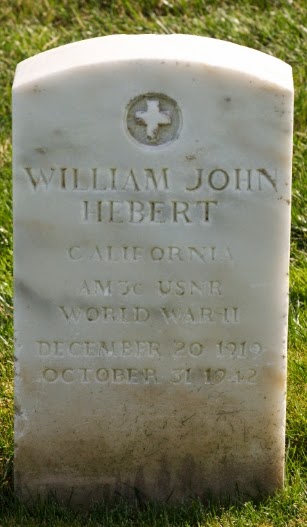
The following day, February 20, saw the loss of Ensign Walt Schmisseur, when his Grumman F6F-5 Hellcat fighter plane was hit by anti-aircraft fire. Schmisseur was a Dodgers prospect who had batted .278 with the Olean Oilers in 1942. February 21 saw the loss of Navy Lieutenant Archie Buckley who had quarterbacked the football team at Washington State. Buckley had died saving crewmates aboard the USS Saratoga after it had been attacked by Japanese planes. On February 22, Second Lieutenant Bob Holmes of the 27th Marines, 5th Marine Division, was killed while in command of a DUKW, six-wheel-drive amphibious truck. Holmes had been a pitcher in the Yankees organization and had been with Binghamton and Norfolk in 1943. First Lieutenant Jimmy Scondras had landed at Iwo Jima with the 12th Marines, 3rd Marine Division and volunteered for duty as a forward scout. The former Holy Cross athlete was killed in action on February 25. Just days earlier, and unknown to Jimmy, his brother, David, had been killed on the battlefields of Europe.
On February 27, 4th platoon commander of the 3rd Reconnaissance Company, 3rd Marine Division, asked for eight volunteers to go out on patrol and find the location of the Japanese mortars that had his men pinned down. Private Jimmy Trimble was among the first to volunteer. Trimble had been a pitching sensation at St. Albans, a prep school in Washington, D.C., and was signed by the Senators as soon as he graduated in 1943. The Senators were paying Trimble’s way through college (Duke) when he enlisted with the Marine Corps in January 1944. Trimble set out towards the front line with his fellow volunteers on February 28. As darkness began to fall the team dug in for the night. There was an eerie quietness to the place. Just after midnight on March 1, a flare unexpectedly lit up the area and the marines were instantly overrun by the Japanese. Trimble took a bayonet in the right shoulder but continued to fire his rifle in the direction of any movement. Seconds later, two grenades dropped into the foxhole. One exploded alongside Trimble. The young pitcher caught the full blast of the grenade. His back, upper arms and the back of his head were a mass of wounds, but he was still alive. Moments later, a Japanese soldier with a mine strapped to his body, jumped in the hole, wrapped his arms around the severely wounded Marine and detonated the mine, killing them both.
On March 2, Private Jack Nealy, a radioman with the 28th Marines, 5th Marine Division, was killed in action. Nealy had signed as a first baseman with the Birmingham Barons of the Southern Association in late-1943 and appeared in just one game. On March 3, Private First-Class John Beck, a machine-gunner with the 26th Marines, 5th Marine Division, lost his life in the fighting. Beck had been a pitcher at San Diego High School and San Diego College (now San Diego University). That same day, Private First-Class Frank Ciaffone of the 9th Marines, 3rd Marine Division, was killed in action. Ciaffone had been an outstanding pitcher at Abraham Lincoln High School on New York’s Coney Island. Following graduation in 1942, he had played for the Dodger Rookies (a team of Brooklyn hopefuls) and would have played in the Dodgers organization in 1943 if he had not enlisted. Corporal Owen Nilsen of the 4th Marine Division had been a catcher with the St. Albans Americans in the Queens Alliance League of New York before enlisting. He was killed in action on March 6. Just days before, he had been awarded a Silver Star for conspicuous gallantry as a member of an advanced reconnaissance team assigned the hazardous mission of obtaining information about the landing beaches and shore installations on February 17 - two days before the actual amphibious landings. Also killed on March 6 was First Lieutenant Harry O’Neill of the 25th Weapons Company, 4th Marine Division. One of only two major leaguers to lose their lives in service during World War II, O’Neill had been a sensation at Gettysburg College, Pennsylvania, before signing with the Philadelphia Athletics in June 1939. He had spent the rest of the season with Philadelphia as their third-string catcher, and made his only major league appearance on July 23, as a late-inning defensive replacement for Frankie Hayes. O'Neill had caught Chubby Dean in the ninth inning without making a plate appearance. In the early evening of March 6, O’Neill was hit by a Japanese sniper’s bullet that pierced his throat, severing his spinal cord and killing him instantly.
 |
| John Beck |
In early March, First Lieutenant Jack Lummus commanded the third rifle platoon in Second Battalion’s E Company, 27th Marines, 5th Marine Division, as they spearheaded a final assault on an objective east of Kitano Point in the north of the island. Lummus led an assault on three concealed Japanese strongholds and despite minor wounds received from grenade shrapnel, he single-handedly knocked out all three positions. The following day, March 8, Lummus stepped on a landmine. Both his legs were blown off but he continued to urge his men on before being evacuated to the 5th Division Field Hospital and underwent surgery and blood transfusions. He died on the operating table the following day. Lummus had been a football and baseball star at Baylor in the late 1930s. He had played minor league baseball with the Wichita Spudders in 1941 and professional football with the New York Giants that winter. He was posthumously awarded the Medal of Honor (one of 27 Iwo Jima recipients), the United States’ highest military honor, awarded for personal acts of valor above and beyond the call of duty.
On March 11, Private First-Class Mike Furdyna of the 28th Marines, 5th Marine Division, died of wounds received while fighting on Iwo Jima. Furdyna had been a star athlete at La Salle Institute, in Troy, New York, playing baseball, basketball and football. He had received an offer from the Brooklyn Dodgers to appear for spring training after graduating in 1943, but enlisted in the marines beforehand.
Although the island was initially declared secure at 18:00 on March 16 (25 days after the landings), the marines still faced Kuribayashi's stronghold in a gorge at the northwestern end of the island. On March 22, 1945, Private James Stewart of the 34th Replacement Draft, 3rd Marine Division, was killed in action. Stewart had been signed by the Atlanta Crackers during the winter of 1943. He never got to play a game, enlisting with the Marine Corps before the following season began.
Four days after the death of Private Stewart, Iwo Jima was officially declared secure. The 36-day assault resulted in more than 26,000 American casualties, including 6,800 dead. Of the 22,000 Japanese troops on the island, 18,844 died either from fighting or by ritual suicide. Only 216 were captured during the course of battle and it was estimated there were close to 3,000 Japanese left alive in the island's warren of caves and tunnels. It was not until January 1949, that the last two Japanese soldiers finally surrendered.
 |
| 4th Marine Division Cemetery on Iwo Jima |
An Important Game
During the battle for Iwo Jima, all-star Tigers catcher Birdie Tebbetts was on the island of Guam; a captain in charge of morale for the Army Air Force. Not surprisingly, baseball played a big part in his daily activities and he had assembled a team of players that included former big leaguers Max West (Braves), Joe Gordon (Yankees), Howie Pollett (Cardinals) and Tex Hughson (Red Sox). As the fighting on Iwo Jima was coming to an end, Tebbetts’ team were dispatched to the island to play for the battle-weary troops. “Our B-24s circled the pockmarked airstrip [on Iwo Jima] and put down for a bumpy landing,” recalled Tebbetts in his autobiography ‘Birdie: Confessions of a Baseball Nomad.’ “It was plain to see that just the day before our guys had been in the midst of a fierce battle; smoke was still rising from burnt-out emplacements and caves.”
 |
| Birdie Tebbetts |
The Seabees bulldozed a diamond out of the rock; its outfield boundaries being the Pacific Ocean. Chalk lines were laid out and empty bomb crates and packing cases were used as makeshift bleachers. “When we got suited up and went out there to warm up,” remembered Tebbetts, “I look around and there were GIs and marines standing on top of boxes, hanging off cranes, trucks and jeeps...Our job...was simple. To put on a big-league ballgame for 12,000 grimy, cheering, gun-toting, battle-torn soldiers and marines. To take their minds off the shear horror of what they had just been through. They came on foot, by jeep, truck, a tank or two, and even some on crutches. It was an incredible sight.”
The game was a huge success and served as a perfect morale booster for the marines of Iwo Jima. Afterwards, Tebbetts was approached by a marine colonel. “This ballgame was a lifesaver,” he told the catcher. “These guys would have gone crazy without something like this to take their minds off what happened here.” The colonel then walked away but stopped, turned back to Tebbetts, saluted, and said, “This is the most important game you’ll ever play, Captain Tebbetts.”
Mariana Baseball Series
In late August 1945, with the war all but over, Seabees cut another baseball field in the side of a hill on Iwo Jima, built stands and named it Higashi (Japanese for east) Field. Birdie Tebbetts was back and this time he came with three teams. The 58th Bombardment Wing Wingmen, the 73rd Bombardment Wing Bombers and the 313th Bombardment Wing Flyers.
Forty-eight players were divided between three teams representing bombardment wings of the 20th Air Force - the 58th Bombardment Wing Wingmen, led by Tebbetts and featuring Enos Slaughter (Cardinals), Joe Gordon, Joe Marty (Phillies), Billy Hitchcock (Tigers), Howie Pollett and Chubby Dean (Indians: the same Chubby Dean that Harry O’Neill had caught in his only major league appearance in 1939); the 73rd Bombardment Wing Bombers, managed by Buster Mills of the Cleveland Indians and featuring Stan Rojek (Dodgers), Taft Wright (White Sox), Mike McCormick (Reds), Tex Hughson and Sid Hudson (Senators farmhand); and the 313th Bombardment Wing Flyers, managed by Lew Riggs of the Dodgers and featuring Johnny Sturm (Yankees), Max West, Walt Judnich (Browns) and Stan Goletz (White Sox).
Based primarily on Tinian and Saipan in the Mariana Islands, all three teams ascended on Iwo Jima for a series of games. On August 29, Tex Hughson hurled the 73rd Bombers to a 3-2 win against the 313th Flyers in the opening game. The following day the 58th Wingmen beat the 313th Flyers, 5-4. Enos Slaughter’s seventh-inning home run was the winning margin in a game that featured seventeen put outs by the two center fielders. John “Swede” Jensen (Pacific Coast League) had 11 for the Flyers while Joe Marty hauled in seven for the Wingmen.
On August 31, Nick Popovich (White Sox farmhand) threw a 3-0 three-hitter for the 58th Wingmen over the 73rd Bombers to clinch the Iwo Jima round-robin series. Two days later the three teams were split into National and American League all-star teams for the final game of the tour. Lew Riggs gave the Nationals a 1-0 lead with a homer in the first inning. The American League tied in the bottom of the inning with doubles from Bob Dillinger (Browns farmhand) and Taft Wright. The Nationals then took a 3-1 lead in the second when Nanny Fernandez (Braves) singled, moved to second on an infield out and scored when Birdie Tebbetts threw into center field trying to pick him off. The National League added two more runs in the ninth when Enos Slaughter doubled, Swede Jensen walked, then Herm Reich (Pacific Coast League) and Bill Leonard (Pacific Coast League) singled. The final score was 5-1 to the senior circuit.
Just like earlier in the year when Birdie Tebbetts brought his team to the island, the ballgames proved very popular with the military personnel (mainly Army Air Force) who were on the island. “One day we were playing on Iwo Jima at the same time as a big named band,” recalled Rugger Ardizoia of the 313th Flyers, a Yankees farmhand before military service. “Playing for the troops we had over 10,000 watching us while the band had only about 1,000. The band leader was so disgusted he decided to pack up and leave while we carried on playing.”
After Iwo Jima
First baseman Jake Jones returned to the White Sox for spring training in 1946. He injured his leg before the season got under way and played just 24 games hitting .266 with five doubles, a triple and three home runs. He played every game of the 1947 season albeit between two different clubs as he was traded by the White Sox to the Boston Red Sox on June 14. Jones batted only .237 but hit 19 home runs and contributed 96 RBIs. The following season was his last in the majors, playing as a backup first baseman to Billy Goodman. He appeared in appeared in 36 games and batted just .200. Jake Jones was recalled to active military service during the Korean War.
Yankees first baseman Buddy Hassett was discharged from the Navy on November 16, 1945. He was 34 years old when he reported to the Yankees spring training camp and was released by the club on April 30, 1946. After considering retiring from baseball, he rejoined the organization and played with the Newark Bears. In 1949, Hassett took over as manager of the New Jersey International League club.
Boston Braves left-hander Art Johnson was wounded later in the war, when fragments from a Japanese kamikaze plane that hit the deck of the carrier USS Langley, tore into his knees. He was discharged from service in October 1945. “I went to spring training in 1946 but could not make it,” he recalled. “My arm was sore, and, of course, my knees were damaged by the kamikaze attack. Billy Southworth was the manager, a really nice guy. I did get a disabled military pension because of the injury.”
Athletics outfielder Eddie Collins, Jr., returned to the club in 1946, but was released in April and spent the season with Jersey City and Buffalo of the International League before retiring from the game as a player. He was assistant general manager of the Philadelphia Phillies from 1954 to 1955.
Yankees farmhand Bob Addis was discharged in 1946 and returned to baseball, spending that season with Wellsville and Binghamton. He was drafted by the Brooklyn Dodgers in November 1947 and was with St. Paul the following year. Addis moved up to the Montreal Royals in 1949, but was traded to the Boston Braves at the end of the season and in 1950 he played with the Milwaukee Brewers of the American Association before being called up and making his major league debut with the Braves on September 1, 1950. He played 16 games that season and batted .250. He remained in the big leagues through 1953.
Browns left-hander Jim Hedgecock returned to the minors in 1946, spending two seasons with Vancouver, winning 21 games in 1947. He played Triple-A ball with Seattle in 1948, but never made it to the major leagues and retired as a player after 1953. Jim Hedgecock was just 48 when he passed away in 1970.
Browns’ farmhand Stan Bazan did not return to professional baseball after the war. Neither did outfielder Arnold Traxler, who was just 44 when he passed away in 1961.
Minor league catcher Bob Schang returned to the minors in 1946, playing in California that year and Louisiana the next.
Left-hander Ed Beaumier was back in the minor leagues in 1947, winning 16 games in the North Carolina State League followed by 10 wins with Rome in the Canadian-American League the following year.
Indians’ farmhand Joe Tipton was back in the minor leagues in 1946. He batted .375 for Wilkes-Barre in 1947 and joined Cleveland the following season. Tipton spent seven seasons in the big leagues as a back-up catcher for the Indians, White Sox, Athletics and Senators.
Harlan Larsen, who had signed with the Cubs before enlisting with the Marines, was aboard the USS Indianapolis when it was torpedoed by a Japanese submarine. Of the 1,196 aboard, about 300 went down with the ship. It is not known whether Larsen got off the ship at this time. Around 900 men were cast into the Pacific Ocean with no lifeboats and little food or water. A series of blunders resulted in four days elapsing before it was realized the ship was missing and by the time the survivors were found only 321 men were still alive (Harlan Larsen was not among them); nearly 600 had died from shark attacks, starvation, thirst, exposure and wounds.
Reds minor leaguer Frank Baumholtz was with Columbia in 1946 and batted .343. He made his big league debut with Cincinnati the following year and played 10 seasons in the majors with the Reds, Cubs and Phillies.
Rhode Island semi-pro Ray Champagne was signed by the Boston Red Sox and went to spring training in 1946. His wife, Violette, was expecting their first child at the time, and the Red Sox wanted to send Champagne to Scranton, Pennsylvania, but he wanted to stay close to home and requested to play for the Lynn Red Sox in the New England League. The Red Sox would not allow this and Champagne chose instead to return to semi-pro ball. He worked as a salesman for 32 years for the International Supply Company in Cranston, Rhode Island.
Texas semi-pro third baseman Billy Parish came home from the war to his wife, Ellouise, and a two-and-a-half year-old daughter, Diane, whom he had never seen. He went to work for the Texas Power and Light Company and continued to play baseball for the company team for a few years.
Kansas high school pitcher Jim Morris was signed by the St. Louis Cardinals in 1946. He won 21 games with Miami (OK) in 1947 and 18 games with St. Joseph in 1949, but arm trouble brought a premature end to his pro career. In 1950, he went to work for the Boeing Airplane Company and continued to play baseball with the Boeing Bombers. Leading them to seven Kansas state titles, two national titles and the very first World Baseball Championship in 1955.
Iowa high schooler Pee Wee Day won a scholarship to Northwestern University where he played baseball and football. In 1949, he played in the Rose Bowl against California with Northwestern winning 20-14. After graduation, professional sports were eager to sign the gifted young athlete and he was offered a contract to play baseball with the St. Louis Cardinals and football for the Chicago Cardinals. He declined both and went to work for the Martin-Marietta Cement Company as a sales representative.
Infielder Wayne Terwilliger completed his education at Western Michigan and was playing second base with the semi-pro Benton Harbor Buds when he was signed by the Chicago Cubs in July 1948. He spent the remainder of the season with Des Moines and was with Los Angeles when he was called up by the Cubs in August 1949. Terwilliger played nine years in the major leagues with the Cubs, Dodgers, Senators, Giants and Athletics. Nearly 89 years old, he has remained in baseball ever since, as a player, manager and coach.
Washington high school player Niles Jordan was aboard the USS Bennett when it was hit by a Japanese kamikaze plane on April 7, 1945. Three men were killed and 18 wounded. Jordan was not among the casualties. After being discharged from military service he attended Mount Vernon Junior College where he played baseball and football. He was signed by the Phillies in 1948 and won 19 games with Klamath Falls in 1949, 17 with Terre Haute in 1950 and 21 with Wilmington in 1951. Jordan made his major league debut with the Phillies in August 1951, starting five games for a 2-3 record. He pitched briefly with the Reds in 1952, and continued to throw in the minors until 1958.
Visit the Baseball's Greatest Sacrifice website